


Jazz is an essential volume of rare and previously unseen photos by Steve Schapiro, featuring the biggest 1960s jazz legends.
"These pictures are very emotional for me. They take me back to a time when everything was copasetic. Elvin Jones is smiling. And I don’t think I’ve ever seen a photo of Paul Chambers smiling, but there he is. Paul Chambers is smiling! All these guys: Ron Carter, Miles, Red Garland. I mean, these pictures take me back into a time which will never be like that again." Sonny Rollins, Jazz, from The Foreword
"This is a great, great book. The shots are unbelievable, just absolutely beautiful, and the writing is spot-on.,,.[It] brings back the times, the power of those times in the 1960s when everything was changing.” Charles McPherson
"A truly magnificent work. We have been overwhelmed by its beauty." Louis Hayes and Nisha Hayes
One of the leading social documentary photographers of the 1960s, Steve Schapiro’s images stand among the most important of the 20th century, covering Muhammad Ali, Martin Luther King, Jr., James Baldwin and many others. These largely unknown jazz photos – shot just before his career breakthrough – showcase his early mastery and his empathy for his subjects, making Jazz: Best of the Apollo, Village Vanguard, and Riverside Sessions an essential archive.
In the early ’60s, when Schapiro arrived on the scene, New York jazz was enjoying a golden age. A young freelance photographer who had grown up in the Bronx and somehow snagged a gig with Riverside Records, he began voraciously documenting shows, players, venues, recording sessions and gatherings both in his native New York and later in Chicago. Whether it’s Sonny Rollins lifting weights backstage, or Bobby Timmons lost in an instant of discovery at the piano, Schapiro was on their wavelength.
Written by US jazz journalist Richard Scheinin Jazz: Best of the Apollo, Village Vanguard, and Riverside Sessions features dozens of never-before-seen photos of jazz legends like Cannonball Adderley, Melba Liston, Bill Evans, Wayne Shorter, Freddie Hubbard, Sonny Rollins, Count Basie and more.
Publisher : ACC Art Books
Publication date : June 2, 2026
Language : English
Print length : 316 pages
ISBN-10 : 1788843428
ISBN-13 : 978-1788843423
Author: Steve Schapiro (Author), Richard Scheinin (Author)

A Scientific American Favorite Book of 2025
The riveting story of the McKissack family—the founders of the leading Black design and construction firm in the United States, from its beginnings in the mid-1800s to its thriving status today—in a moving celebration of resilience and innovation.
Captured in his native West Africa and enslaved on American shores by a North Carolina plantation owner, Moses McKissack I began to build his way to emancipation right from the start. Becoming an enslaved craftsman, he picked up the trade his family would become famous for in the earliest years of the 19th century, passing his learnings down to his children and seeing them off to freedom after the Civil War.
The family would settle in Tennessee, getting its bearings in the building trades despite rampant discrimination, establishing a foothold that now sees its latest generations working at the absolute peak of its industry.
The family’s fingerprints have been left all across the United States, spanning from Reconstruction to contemporary times, through projects like the Morris Memorial Building, Capers C.M.E. Church, John F. Kennedy International Airport, and Philadelphia’s Lincoln Financial Field.
Here, Cheryl McKissack Daniel, CEO and president of McKissack & McKissack, reveals the full fascinating story of her family. So much more than an exploration of architectural achievements, The Black Family Who Built America is also a compelling illustration of how history rhymes and reverberates, and a celebration of the human spirit’s ability to overcome adversity and drive change. From Moses’s humble beginnings to Cheryl’s current role as a trailblazer and champion of diversity, the family’s journey underscores the importance of perseverance, innovation, and strategic vision in shaping a legacy that continues to inspire and impact the construction industry.
Publisher : Atria/Black Privilege Publishing
Publication date : August 12, 2025
Author: Cheryl McKissack Daniel
Print length : 288 pages
ISBN-10 : 1668033992
ISBN-13 : 978-1668033999
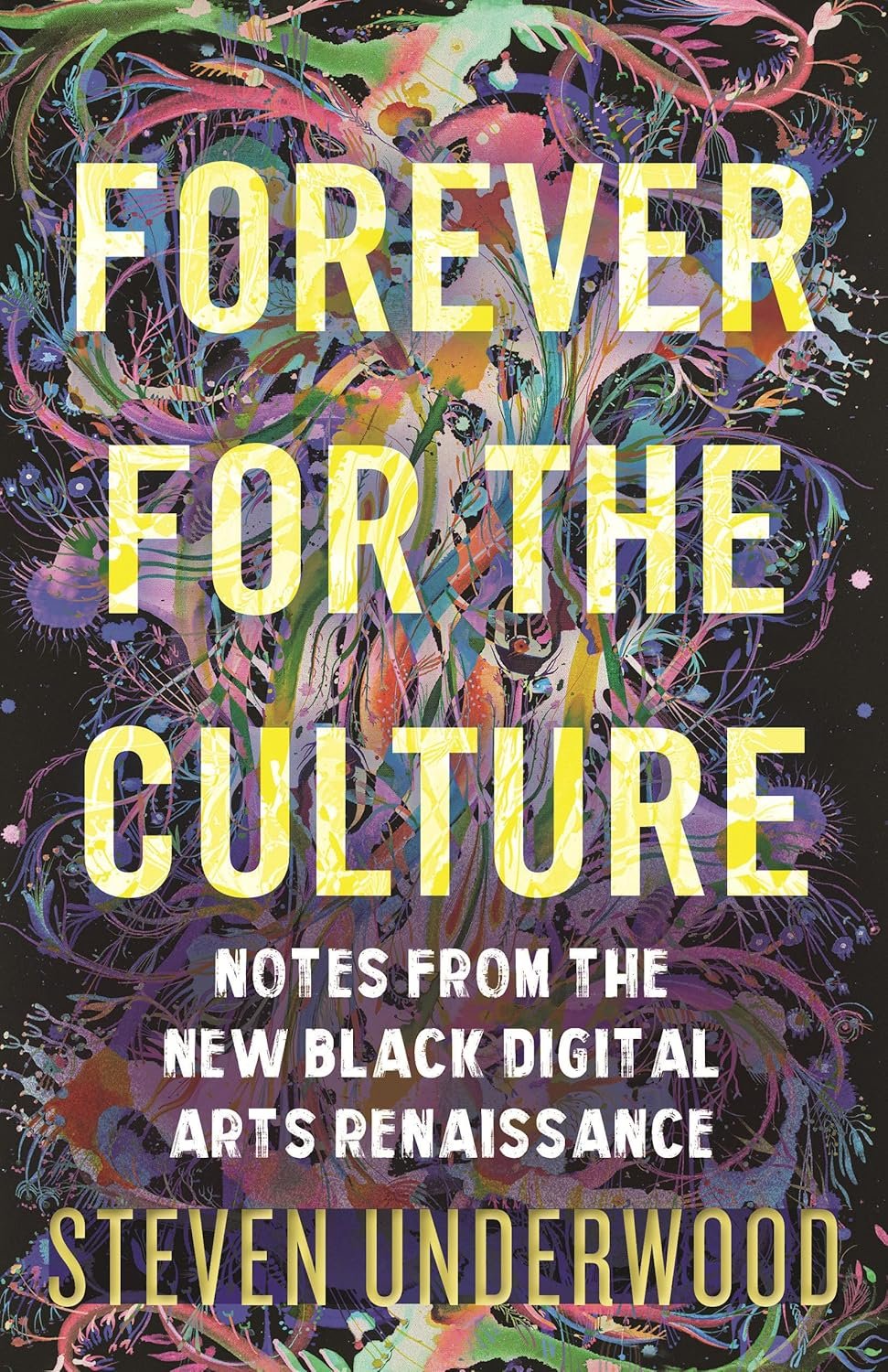
THE CURATORS OF CULTURE: Celebrate Black digital art in this essay collection revealing how Black artists have shaped everything from TikTok dances to viral memes
Steven Underwood digs into the current Black digital arts movement that has shaped popular culture for the last decade. He connects this current space to historical influences, speaking to a “legacy of audacity and daring that presented us with the opportunity to redirect the conversations on Blackness back on its center. Back to Black people.” Written as a collection of thought-provoking essays pulling in social commentary, interviews, popular culture, and deep research, Underwood taps into a topic that is incredibly relevant but often unknown.
The nature of the internet is so ephemeral that sometimes we forget when we do something worth celebrating. For Black people particularly, that’s unforgiveable. Digital Black art has become increasingly more outspoken, introspective, and genre-defining. But it’s also vulnerable. Original phrases, tweets, dances, songs, and other content are often taken from a Black artist and attributed to a white influencer. And Black creators are paid less for their work, though their engagement is often higher than that of their white peers. There is also the added risk of backlash and hate that comes with publicly existing online. As an award-winning writer with a popular online presence, Underwood is no stranger to the experiences of Black digital artists. Using his own personal stories, he highlights the beauty, vulnerability, and innovation of the Black digital arts movement.
Shining a light on the curators of our culture, Forever for the Culture narratively follows the construction of a new Black art movement and how creators have defined a community when that community does not have a physical space.
No results match your search. Try removing a few filters.