
History
History
Filters
Filters
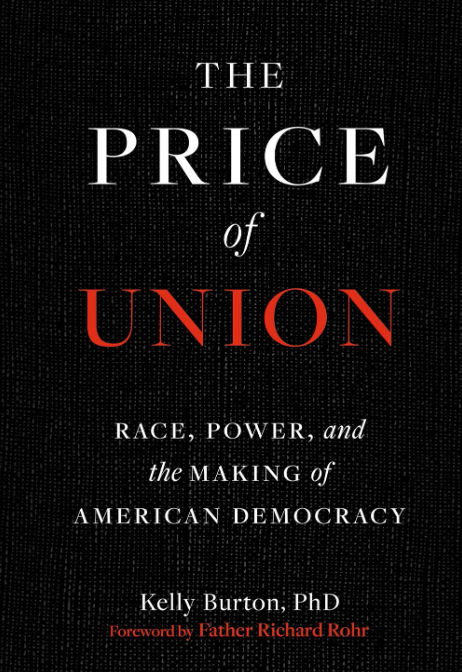
What if American democracy isn’t undergoing a political crisis but a racial reckoning?
In The Price of Union, political scientist and civic leader Kelly Burton argues that our democratic crisis runs deeper than political divisions. It is—and has always been—ultimately a matter of race.
From the beginning, American democracy and racial caste have existed in a codependent relationship, each shaping and sustaining the other.
Drawing on four hundred years of history—from Jamestown to January 6—Burton shows how this arrangement has defined the nation’s institutions and values and how as the caste system begins to weaken, the democracy it upheld is beginning to come apart.
Picking up where Isabel Wilkerson’s modern classic Caste left off, Burton offers a deeply researched, narrative-rich retelling of the American story that exposes the original bargain that more than anything else made America what it is today. The result is a sweeping and provocative work that challenges and reframes how we understand power, race, and belonging in the “land of the free.”
The Price of Union invites readers to confront the true cost of the American experiment as we have known it—and to imagine what has never been: a nation built on shared humanity and capable of serving the common good.
ASIN : B0GZXC3M78
Publisher : Amplify Publishing
Publication date : September 15, 2026
Language : English
Print length : 368 pages
ISBN-13 : 979-8900260990
Author: Kelly Burton PhD

A revolutionary new history that exposes the "whites-only" roots of the American immigration regime.
In Racist by Design, award-winning historian Kelly Lytle Hernández reveals how generations of lawmakers and law enforcers built the American immigration system to encourage white immigrants while targeting nonwhite migrants for exclusion, punishment, and removal. The goal, often explicitly stated by the system’s architects, was to create a permanent caste of undocumented and criminalized workers to provide cheap labor for the American economy.
Many Americans’ understanding of the immigration system begins with the Chinese Exclusion Act of the late nineteenth century. Lytle Hernández expands that history by a full century, showing how the Haitian Revolution of the 1790s inspired not only America’s first immigration bans (to prevent news of a free Black republic from reaching our shores) but also its first refugee resettlement program (to welcome and support Haiti’s evicted enslavers.) She explains how Chinese Exclusion led the Supreme Court to disconnect immigration laws from the constitution. She reveals how eugenicists and Jim Crow segregationists built much of our current immigration regime as expressly "whites-only," and shows how during the Civil Rights Movement, Congress amended this system but never abolished it, leaving many of the regime’s racist rules and rituals intact today.
Lytle Hernández calls Racist by Design "an act of sabotage," a book that will expose the blueprints of the system, so it can be dismantled. A nuanced, concise, and brilliant work that will outrage and inflame readers, Racist by Design is a major work by one of our most important historians.
12 illustrations
Publisher : W. W. Norton & Company
Publication date : September 22, 2026
Language : English
Print length : 304 pages
ISBN-10 : 1324117095
ISBN-13 : 978-1324117094
Author: Kelly Lytle Hernández
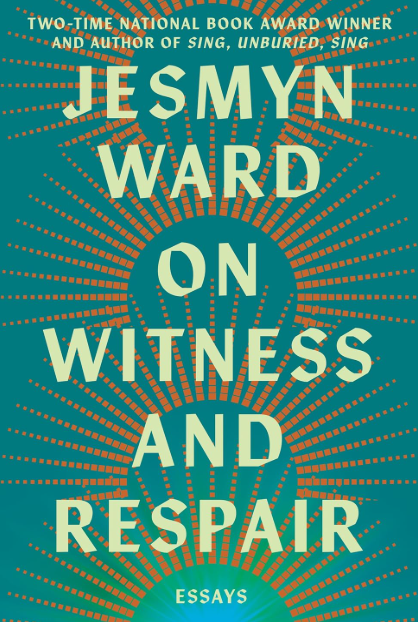
The collected creative nonfiction of a singular American writer, Jesmyn Ward, including widely shared classics, three never-before-published speeches, and an introductory essay.
Respair (noun, obsolete), fresh hope after despair.
From the two-time National Book Award winner and New York Times bestselling author Jesmyn Ward, this collection of essays documents more than a decade of work in the life of a singular writer often lauded as “the heir apparent to Toni Morrison” (LitHub). Beginning with her upbringing in a multigenerational household in rural Mississippi, the cradle of both her youth and her gift for storytelling, Ward brings her keen wisdom and hauntingly lyrical prose to a range of topics, following in her grandmother Dorothy’s footsteps when she promises always to “Tell it straight. Tell it all.”
True to her word, in these pages Ward contemplates the writers and novels of her youth and adulthood—the transformative power of discovering Octavia Butler as a twenty-something, the mirror that Richard Wright’s novels held up to her own childhood, and of course, her lifelong love for Toni Morrison. Ward ruminates on her approach to both fiction and life, reflecting on the power of the novel, how to raise a Black son in an era of rising divisiveness and cruelty, as well as her own personal tragedies—including the titular essay of the collection, which tells the story of her partner’s sudden death on the eve of the COVID-19 epidemic. Every bit as piercing and moving as her fiction, On Witness and Respair is a testament to Ward’s powers as “one of America’s finest living writers” (San Francisco Chronicle) and is a monument to hope, beauty, and personal and collective resilience.
Publisher : Scribner
Publication date : May 19, 2026
Language : English
Print length : 256 pages
ISBN-10 : 166806426X
ISBN-13 : 978-1668064269
Author: Jesmyn Ward
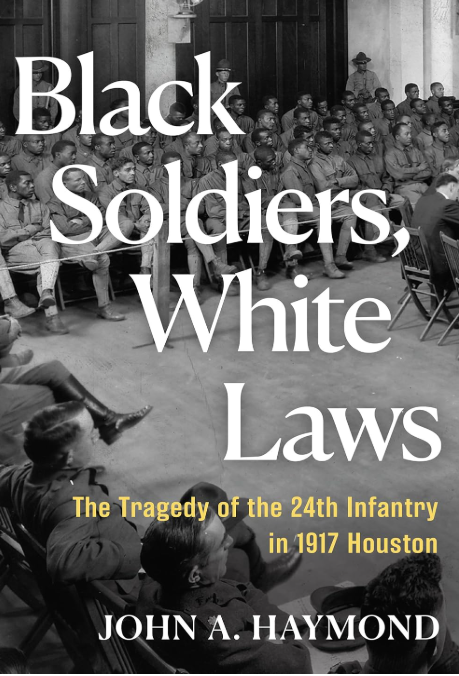
The first full and definitive narrative of one of the most shocking and largely unknown events of racial injustice in US history: the execution of nineteen Black soldiers in Texas
On the sweltering, rainy night of August 23, 1917, one of the most consequential events affecting America’s long legacy of racism and injustice began in Houston, Texas. Inflamed by a rumor that a white mob was arming to attack them, and after weeks of police harassment, more than 100 African American soldiers of the 3rd Battalion, 24th Infantry Regiment, took their weapons without authorization and, led by a sergeant, marched into the largely Black San Felipe district of the city. Violent confrontations with police and civilians ensued and nineteen lives were lost.
The Army moved quickly to court-martial 118 soldiers on charges of mutiny and murder, even though a majority of the soldiers involved had never fired their weapons. Inadequately defended en masse by a single officer who was not a lawyer and had no experience in capital cases, in three trials undermined by perjured testimony and clear racial bias, and confronted by an all-white tribunal committed to a rapid judgment, 110 Black soldiers were found guilty—despite the fact that no mutiny had, in fact, taken place. In the predawn darkness of December 11, thirteen of them were hanged at Fort Sam Houston in San Antonio—hastily and in secret, without any chance to appeal. News of the largest mass execution in the Army’s history outraged the country and inspired preventive legislation; and yet six more Black soldiers were executed in early 1918 and the rest were sentenced to life in prison.
The Houston Incident, as it became known, has remained largely untold, a deep stain on the Army’s record and pride. Award-winning historian and Army veteran John A. Haymond has spent six years researching the events surrounding the Incident and leading the efforts that ultimately led, in November 2023, to the largest act of retroactive clemency in the Army’s history when the verdicts were overturned and honorable discharges awarded to all the soldiers involved. His dramatic chronicle of what transpired—situated amongst the rampant racism in Texas and the country—is a crucially important and harrowing reminder of our racially violent past, offering the promise that justice, even posthumously, can prevail.
Publisher : Grove Press
Publication date : July 14, 2026
Author: John A. Haymond
Language : English
Print length : 400 pages
ISBN-10 : 0802167594
ISBN-13 : 978-0802167590
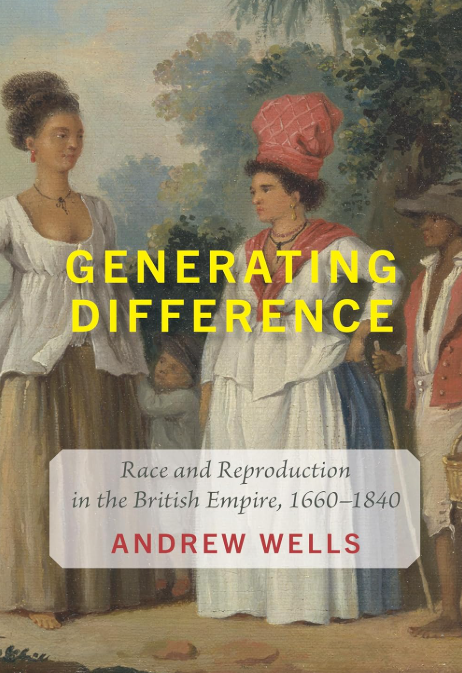
Explores the intersection of racial thought and reproductive science and policy across the British Empire.
In Generating Difference, Andrew Wells traces the entwined histories of race, sex, and reproduction in Britain and its empire during the long eighteenth century. Challenging the assumption that the concept of race evolved in the modern era solely through new forms of biological science, Wells argues that older ideas of lineage, sexual reproduction, and bodily difference remained central to how race was understood, categorized, and enforced well into the nineteenth century.
From the pages of Enlightenment science to colonial policy in the Caribbean, South Asia, and the Pacific, Wells shows how reproductive sex served as a primary framework for defining human differences. Concepts of identity were written onto bodies—especially those marked as non-white or non-male—through perceived differences in anatomy, fertility, and sexuality, albeit never unproblematically. Whether in debates about slavery, interracial relationships, embryology, or population policy, the reproductive body became the crucible in which ideas about race and sex were forged and maintained.
Offering a global scope beyond the Atlantic, including South Asia and the Pacific, and drawing from a wide range of sources—from satire to scientific treatises—Generating Difference brings the scholarship of race and sexuality into direct and compelling conversation. Wells uncovers how deeply reproduction structured imperial ideologies and how the policing of bodies helped naturalize hierarchy, control, and exclusion. At its core, the book reconsiders what made difference "visible" in a period before the dominance of the idea of racial biology.
Publisher : Johns Hopkins University Press
Publication date : January 13, 2026
Author: Andrew Wells
Language : English
Print length : 390 pages
ISBN-10 : 1421453606
ISBN-13 : 978-1421453606
Publishers Weekly • Best Books of 2025 [Nonfiction]
Foreign Policy • Most Anticipated Books of 2025
“Howard French’s The Second Emancipation stands the second half of the last century on its geopolitical head.” ―David Levering Lewis, winner of the Pulitzer Prize
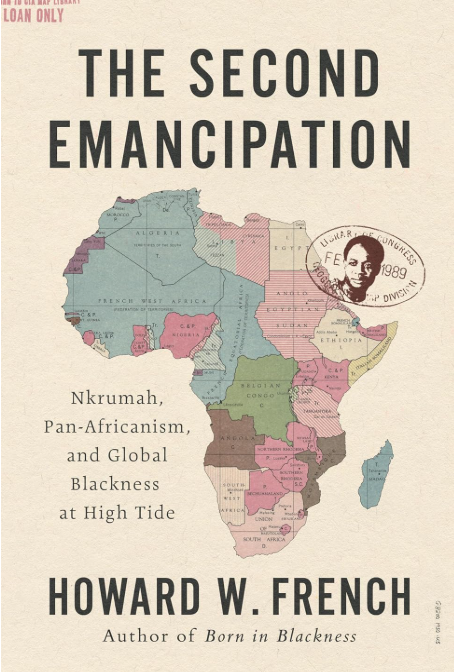
From the acclaimed author of Born in Blackness comes an extraordinary account of Africa’s liberation from colonial oppression, a work that fundamentally reshapes our understanding of modern history.
The Second Emancipation, the second work in a trilogy from best-selling author Howard W. French about Africa’s pivotal role in shaping world history, underscores Adam Hochschild’s contention that French is a “modern-day Copernicus.” The title―referring to a brief period beginning in 1957 when dozens of African colonies gained their freedom―positions this liberation at the center of a “movement of global Blackness,” with one charismatic leader, Kwame Nkrumah (1909–1972), at its head.
That so few people today know about Nkrumah is an omission that French demonstrates is “typical of our deliberate neglect of Africa’s enormous role in the birth of the modern world.” Determined to re-create Nkrumah’s life as “an epic twentieth-century story,”The Second Emancipationbegins with his impoverished, unheralded birth in the far-western region of Ghana’s Gold Coast. But blessed with a deep curiosity, a young Nkrumah pursued an overseas education in the United States. Nowhere is French’s consummate style more vivid than in Nkrumah’s early years in Depression-era America, especially in his mesmerizing portrait of a culturally effervescent Harlem that Nkrumah encountered in 1935 before heading to college. During his student years in Pennsylvania and later as an activist in London, Nkrumah became steeped in a renowned international Black intellectual milieu―including Du Bois, Garvey, Fanon, Padmore, and C.L.R. James, who called him “one of the greatest political leaders of our century”―and formed an ideology that readied him for an extraordinarily swift and peaceful rise to power upon his return to Ghana in 1947.
Four years later, in a political landslide he engineered while imprisoned, Nkrumah stunned Britain by winning the first general election under universal franchise in Africa, becoming Ghana’s first independent prime minister in 1957. As leader of a sovereign nation, Nkrumah wielded his influence to promote the liberation of the entire continent, pushing unity as the only pathway to recover from the damages of enslavement and subjugation. By the time national military and police forces, aided by the CIA, overthrew him in 1966, Nkrumah’s radical belief in pan-African liberation had both galvanized dozens of nascent African states and fired a global agenda of Black power.
In its dramatic recasting of the American civil rights story and in its tragic depiction of a continent that once exuded all the promise of a newly won freedom,The Second Emancipationbecomes a generational work that positions Africa at the forefront of modern-day history.
Publisher : Liveright
Publication date : October 6, 2026
Author: Howard W. French
Language : English
Print length : 512 pages
ISBN-10 : 1324099372
ISBN-13 : 978-1324099376
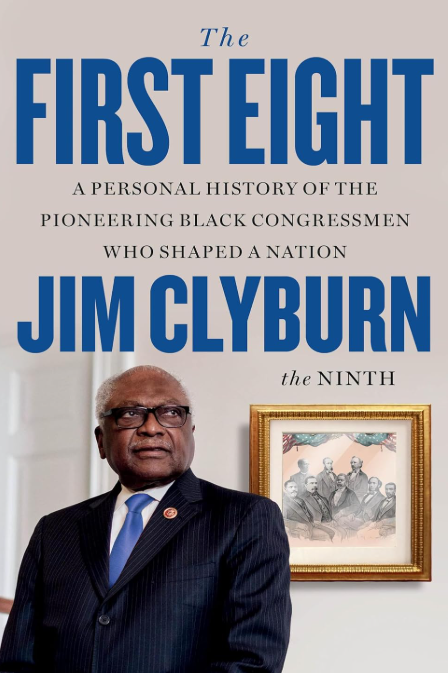
From one of America's most venerable politicians, the powerful, untold story of the pioneering Black congressmen from South Carolina who were elected in the aftermath of the Civil War, revealing why it took nearly a century before the ninth, James Clyburn, was elected.
Today, South Carolina congressman James E. Clyburn is renowned as a Democratic kingmaker and our nation's most august Black political leader. But behind him stand eight other remarkable men: the first Black politicians to go to Congress from his home state, and who blazed a path for his own ascent. Since his own arrival in Congress in the early nineties, Congressman Clyburn has been guided by the wisdom and example of these men, and also instructed by their struggles—especially with the demon of American racism. South Carolina's first eight Black congressmen all rose to office following the Civil War and emancipation, but then the dark veil of Jim Crow fell across the South. It would take nearly a century before the ninth Black representative, Clyburn himself, was elected.
In The First Eight, Congressman Clyburn shares these men's stories, and their message of liberty, with the nation they served. Among them are Joseph Rainey, the first Black politician to be elected to the U.S. House of Representatives in our nation's history, who was born enslaved in 1832; Robert Smalls, iconic for his heroism during the Civil War, when he fled the Confederacy, stole a ship, and fought for the Union Army; and Richard Cain, who ran a widely read newspaper for Black South Carolinians and is associated with the Emanuel AME Church, one of the oldest and most distinguished Black churches in America, and where neo-Nazi Dylan Roof killed nine Black congregants in a mass shooting in 2015. Through the trials, tribulations, triumphs, and challenges that all nine men faced, Congressman Clyburn reveals a whole new way of understanding the period between the Civil War and the present.
A unique blend of history and memoir, The First Eight is both a monument to the legacies of these eight trailblazing Americans, and also a clear-eyed appraisal of how far we've come, and how far we have left to go, in our nation's ongoing struggle for true democracy.
Publisher : Little, Brown and Company
Publication date : November 11, 2025
Author: Jim Clyburn
Language : English
Print length : 304 pages
ISBN-10 : 0316572748
ISBN-13 : 978-0316572743
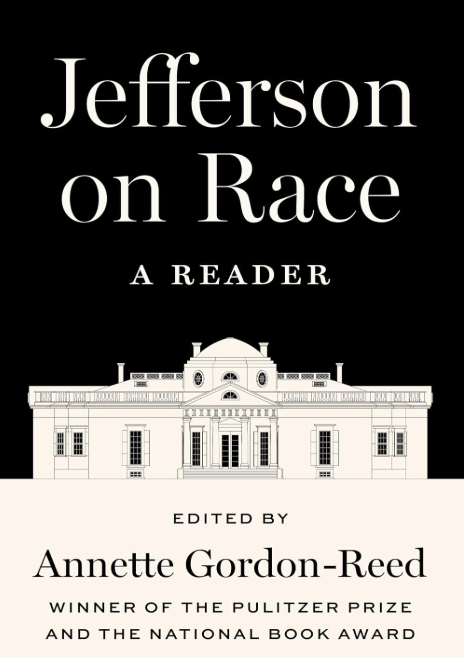
From The New York Times–bestselling and Pulitzer Prize–winning author of The Hemingses of Monticello, a groundbreaking collection of Thomas Jefferson’s writings on race that every American should read
Among America’s Founding Fathers, none was more deeply, personally, or controversially entangled with race and slavery than Thomas Jefferson. The man whose Declaration of Independence proclaimed that “all men are created equal” enslaved more than 600 people of African descent even as he acknowledged the injustice of slavery, saw himself as its opponent, and condemned it in his writings. How is this possible? In Jefferson on Race, Pulitzer Prize–winning historian Annette Gordon-Reed gathers Jefferson’s most revealing writings about African Americans, slavery, and Native Americans, enabling readers as never before to directly explore his complex and contradictory thoughts, feelings, and decisions on these subjects—the most hotly debated aspect of his legacy.
These selections come from Jefferson’s public and private writings, letters, and plantation records, as well as accounts by contemporaries, including his son Madison Hemings and three other people formerly enslaved at Monticello. The book documents Jefferson’s ideas about—and self-image in relation to—African Americans, slavery, and Native Americans, as well as his conduct, including interactions with individual Black and Native people. The writings show how Jefferson responded to living in a multiracial slave society while professing progressive ideals, and how his views on race and slavery were shaped by his experiences with enslaved Black people.
Jefferson on Race is essential reading for anyone seeking to understand Jefferson’s conflicted attitudes—and the impact of race and slavery on American history.
Publisher : Princeton University Press
Publication date : March 31, 2026
Author: Thomas Jefferson
Language : English
Print length : 416 pages
ISBN-10 : 0691122067
ISBN-13 : 978-0691122069
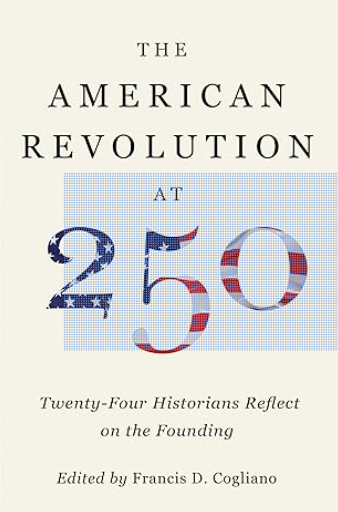
The preeminent historians of the founding era speak their mind on the anniversary of the United States’ birth
In these powerful and personal essays, some of the most celebrated historians of the American Revolutionary era reflect on the meaning of 1776 to the nation in 2026, offering fresh insights and food for thought on every page. They tackle the most pressing topics that Americans debated in 1776 and continue to debate today: the meaning of democracy; the nature of information wars; immigration and the rights and obligations of citizenship; race and slavery; public health; the various and conflicting legacies of the founders; and the shifting nature of commemoration itself. Like the Revolutionary generation they know so well, on some issues these scholarly authorities find themselves largely in accord; on others they vehemently disagree. This is historical debate at its most urgent.
No results found
No results match your search. Try removing a few filters.