Race & Diversity
Race & Diversity
Filters
Filters
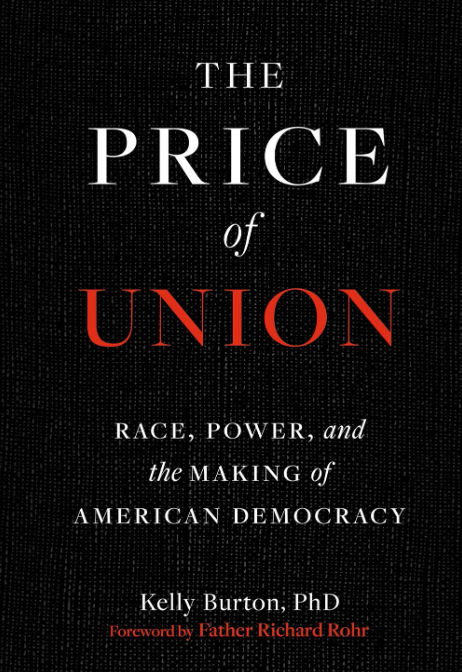
What if American democracy isn’t undergoing a political crisis but a racial reckoning?
In The Price of Union, political scientist and civic leader Kelly Burton argues that our democratic crisis runs deeper than political divisions. It is—and has always been—ultimately a matter of race.
From the beginning, American democracy and racial caste have existed in a codependent relationship, each shaping and sustaining the other.
Drawing on four hundred years of history—from Jamestown to January 6—Burton shows how this arrangement has defined the nation’s institutions and values and how as the caste system begins to weaken, the democracy it upheld is beginning to come apart.
Picking up where Isabel Wilkerson’s modern classic Caste left off, Burton offers a deeply researched, narrative-rich retelling of the American story that exposes the original bargain that more than anything else made America what it is today. The result is a sweeping and provocative work that challenges and reframes how we understand power, race, and belonging in the “land of the free.”
The Price of Union invites readers to confront the true cost of the American experiment as we have known it—and to imagine what has never been: a nation built on shared humanity and capable of serving the common good.
ASIN : B0GZXC3M78
Publisher : Amplify Publishing
Publication date : September 15, 2026
Language : English
Print length : 368 pages
ISBN-13 : 979-8900260990
Author: Kelly Burton PhD

A revolutionary new history that exposes the "whites-only" roots of the American immigration regime.
In Racist by Design, award-winning historian Kelly Lytle Hernández reveals how generations of lawmakers and law enforcers built the American immigration system to encourage white immigrants while targeting nonwhite migrants for exclusion, punishment, and removal. The goal, often explicitly stated by the system’s architects, was to create a permanent caste of undocumented and criminalized workers to provide cheap labor for the American economy.
Many Americans’ understanding of the immigration system begins with the Chinese Exclusion Act of the late nineteenth century. Lytle Hernández expands that history by a full century, showing how the Haitian Revolution of the 1790s inspired not only America’s first immigration bans (to prevent news of a free Black republic from reaching our shores) but also its first refugee resettlement program (to welcome and support Haiti’s evicted enslavers.) She explains how Chinese Exclusion led the Supreme Court to disconnect immigration laws from the constitution. She reveals how eugenicists and Jim Crow segregationists built much of our current immigration regime as expressly "whites-only," and shows how during the Civil Rights Movement, Congress amended this system but never abolished it, leaving many of the regime’s racist rules and rituals intact today.
Lytle Hernández calls Racist by Design "an act of sabotage," a book that will expose the blueprints of the system, so it can be dismantled. A nuanced, concise, and brilliant work that will outrage and inflame readers, Racist by Design is a major work by one of our most important historians.
12 illustrations
Publisher : W. W. Norton & Company
Publication date : September 22, 2026
Language : English
Print length : 304 pages
ISBN-10 : 1324117095
ISBN-13 : 978-1324117094
Author: Kelly Lytle Hernández
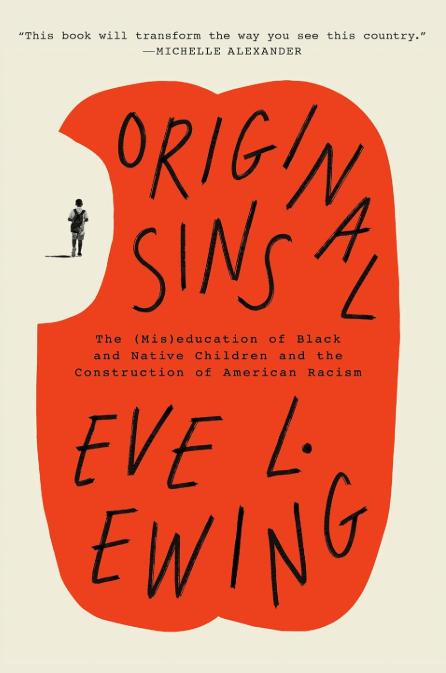
NEW YORK TIMES BESTSELLER • “A fascinating and eye-opening look at how American schools have helped build and reinforce an infrastructure of racial inequality . . . a must-read for every American parent and educator.”—Esquire
“Though the argument of this book is bleak, it illuminates a path for a more just future that is nothing short of dazzling.”—Oprah Daily
“This book will transform the way you see this country.”—Michelle Alexander, author of The New Jim Crow
A BEST BOOK OF THE YEAR: The New Yorker, Esquire, Elle, Chicago Public Library • LONGLISTED FOR THE ANDREW CARNEGIE MEDAL
If all children could just get an education, the logic goes, they would have the same opportunities later in life. But this historical tour de force makes it clear that the opposite is true: The U.S. school system has played an instrumental role in creating and upholding racial hierarchies, preparing children to expect unequal treatment throughout their lives.
In Original Sins, Ewing demonstrates that our schools were designed to propagate the idea of white intellectual superiority, to “civilize” Native students and to prepare Black students for menial labor. Education was not an afterthought for the Founding Fathers; it was envisioned by Thomas Jefferson as an institution that would fortify the country’s racial hierarchy. Ewing argues that these dynamics persist in a curriculum that continues to minimize the horrors of American history. The most insidious aspects of this system fall below the radar in the forms of standardized testing, academic tracking, disciplinary policies, and uneven access to resources.
By demonstrating that it’s in the DNA of American schools to serve as an effective and underacknowledged mechanism maintaining inequality in this country today, Ewing makes the case that we need a profound reevaluation of what schools are supposed to do, and for whom. This book will change the way people understand the place we send our children for eight hours a day.
Publisher : One World
Publication date : April 14, 2026
Language : English
Print length : 400 pages
ISBN-10 : 0593243722
ISBN-13 : 978-0593243725
Author: Eve L. Ewing
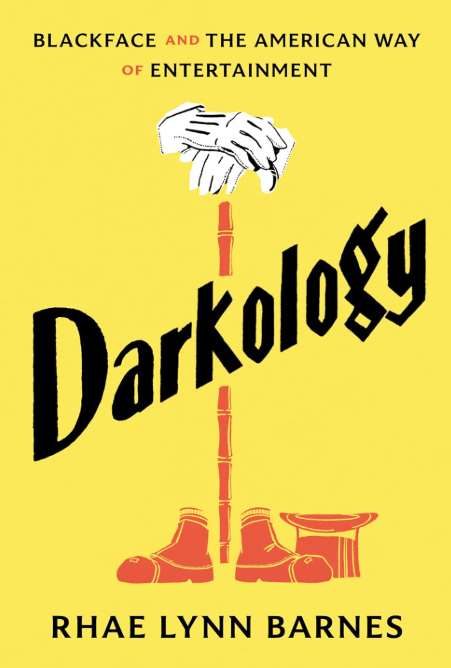
"This book, I suspect, will detonate over certain corners in America.... Darkology is a major and thrilling work of American history." ―Dwight Garner, New York Times Book Review
As Heard on NPR's Fresh Air: "Quite enlightening." ―Terry Gross
"Tremendous.... Barnes has corralled the chaos, contradiction, and surprise of American social reality; evaded mythology; and made... the ‘unwritten’ legible.... [A] painfully necessary autopsy of the nation’s soul." ―Walton Muyumba, Boston Globe
Named one of the Best Books of the Month by the New York Times, TIME, and Kirkus Reviews
A groundbreaking history, decades in the making, that chronicles how blackface dominated American society culturally, financially, and racially for nearly two centuries.
Never before has the disturbing story of blackface and its piercing reflection of American society been so comprehensively told. With Darkology, Princeton historian Rhae Lynn Barnes meticulously unravels the complex, subterranean, and all-too-often expunged history of “Darkology”―the insidious study, commodification, and dehumanization of Black life, through which performers caricatured the enslaved and formerly enslaved for their supposed subservience and happy demeanor.
Given the extraordinary research reflected inDarkology, it’s not surprising that Barnes spent twenty years tracking down “fading photographs, old movies, bureaucratic detritus, moldy scripts, and living witnesses, assembling an impressive archive that allowed her to demonstrate the astonishingly broad reach of blackface minstrelsy” (Laurel Thatcher Ulrich). Painstakingly piecing together these scattered shards of evidence, Barnes reveals the shocking extent to which blackface took center stage in every era of American history.
This was not a fringe activity. By 1830, as political resistance to slavery grew, blackface exploded from a niche performance into a venomous national export. Within a decade, hardly a theater in the countrydidn’tput on minstrel shows. Following the Civil War, this grotesque entertainment soared, seeping from professional theaters into everyday amateur shows, print, and advertisements. It was everywhere: Elks Clubs, religious institutions, battlefields, universities, and schools. It wasn’t justinthe Jim Crow era; itdefinedit. The very name “Jim Crow” derives from minstrelsy’s founding character.
Darkologydismantles the myth that blackface was a fleeting, post–Civil War phenomenon. Even in eras known for liberal progressivism, it flourished. Barnes unearths the startling fact that four-term president Franklin D. Roosevelt was a devotee who died hours before a blackface show he had commissioned at Warm Springs. It permeated U.S. military bases and was even used in World War II Japanese American concentration camps and German POW camps as a bizarre tool of “Americanization.”
After WWII, the tide began to turn as Black veterans and mothers in places like suburban California protested the practice in schools. Still, blackface performances proved resilient, surfacing as late as 1969 at the University of Vermont. Even as the Civil Rights movement fought for equality, blackface remained present in American politics and white supremacist organizing through the Nixon and Ford administrations, its legacy still percolating in variable forms today.
By tracing minstrelsy’s evolution through oral histories, material culture, and a wide range of multimedia sources, Barnes’s “masterpiece” (David Blight) forces us to reckon with the myriad ways the American Dream wore blackface. Recasting this American story with “vivid and engaging storytelling” (Howard French),Darkologyis a landmark work that peers beneath the boulders deliberately obscuring our past―illuminating a path toward a more just and equal society in America’s future. 72 illustrations
Publisher : Liveright
Publication date : March 24, 2026
Author: Rhae Lynn Barnes
Language : English
Print length : 528 pages
ISBN-10 : 1631496344
ISBN-13 : 978-1631496349
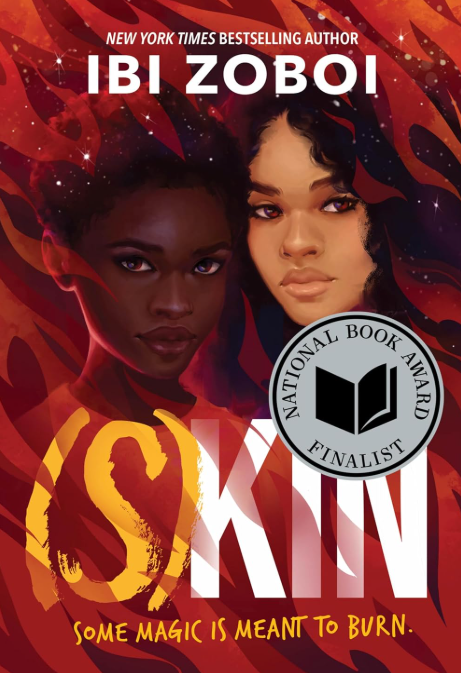
A FINALIST FOR THE 2025 NATIONAL BOOK AWARD
SIX STARRED REVIEWS
A Junior Library Guild Gold Standard Selection
From award-winning, New York Times bestselling author Ibi Zoboi comes her groundbreaking contemporary fantasy debut—a novel in verse based on Caribbean folklore—about the power of inherited magic and the price we must pay to live the life we yearn for.
“Our new home with its
thick walls and locked doors
wants me to stay trapped in my skin—
but I am fury and flame.”
Fifteen-year-old Marisol is the daughter of a soucouyant. Every new moon, she sheds her skin like the many women before her, shifting into a fireball witch who must fly into the night and slowly sip from the lives of others to sustain her own. But Brooklyn is no place for fireball witches with all its bright lights, shut windows, and bolt-locked doors.… While Marisol hoped they would leave their old traditions behind when they emigrated from the islands, she knows this will never happen while she remains ensnared by the one person who keeps her chained to her magical past—her mother.
Seventeen-year-old Genevieve is the daughter of a college professor and a newly minted older half sister of twins. Her worsening skin condition and the babies’ constant wailing keep her up at night, when she stares at the dark sky with a deep longing to inhale it all. She hopes to quench the hunger that gnaws at her, one that seems to reach for some memory of her estranged mother. When a new nanny arrives to help with the twins, a family secret connecting her to Marisol is revealed, and Gen begins to find answers to questions she hasn’t even thought to ask.
But the girls soon discover that the very skin keeping their flames locked beneath the surface may be more explosive to the relationships around them than any ancient magic.
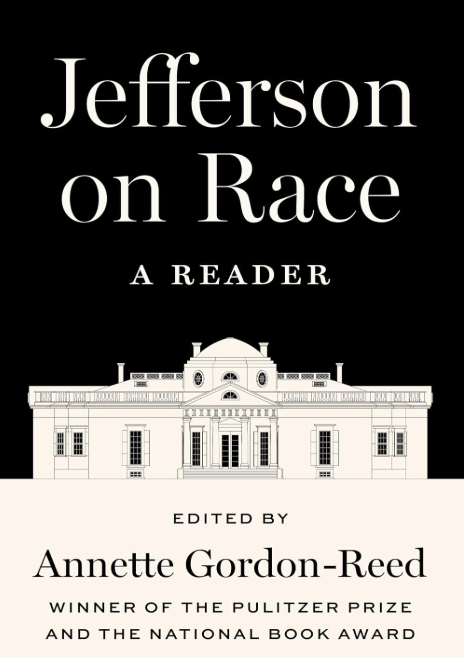
From The New York Times–bestselling and Pulitzer Prize–winning author of The Hemingses of Monticello, a groundbreaking collection of Thomas Jefferson’s writings on race that every American should read
Among America’s Founding Fathers, none was more deeply, personally, or controversially entangled with race and slavery than Thomas Jefferson. The man whose Declaration of Independence proclaimed that “all men are created equal” enslaved more than 600 people of African descent even as he acknowledged the injustice of slavery, saw himself as its opponent, and condemned it in his writings. How is this possible? In Jefferson on Race, Pulitzer Prize–winning historian Annette Gordon-Reed gathers Jefferson’s most revealing writings about African Americans, slavery, and Native Americans, enabling readers as never before to directly explore his complex and contradictory thoughts, feelings, and decisions on these subjects—the most hotly debated aspect of his legacy.
These selections come from Jefferson’s public and private writings, letters, and plantation records, as well as accounts by contemporaries, including his son Madison Hemings and three other people formerly enslaved at Monticello. The book documents Jefferson’s ideas about—and self-image in relation to—African Americans, slavery, and Native Americans, as well as his conduct, including interactions with individual Black and Native people. The writings show how Jefferson responded to living in a multiracial slave society while professing progressive ideals, and how his views on race and slavery were shaped by his experiences with enslaved Black people.
Jefferson on Race is essential reading for anyone seeking to understand Jefferson’s conflicted attitudes—and the impact of race and slavery on American history.
Publisher : Princeton University Press
Publication date : March 31, 2026
Author: Thomas Jefferson
Language : English
Print length : 416 pages
ISBN-10 : 0691122067
ISBN-13 : 978-0691122069
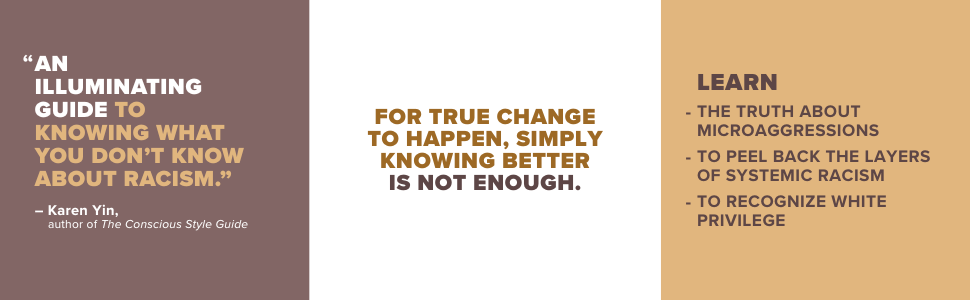
Practice a new framework for dismantling racial bias in our society, our workplaces, and ourselves: by learning to detect it as well as people of color do.
How do we combat racism in a world determined to tell us it doesn’t exist?
To hold the line against racism, we need to know it when we see it. And as the dominant racial group in our society, White people must take up the charge. The problem, says researcher, DEI leader, and organizational consultant Dr. Evelyn Carter, is that White people haven’t been socialized to detect racial bias in the way people of color do. Racism is more than using racial slurs or overt, hateful speech, and it’s more than unintentional slights; it's about an entire system that upholds Whiteness as the preferred standard.
Fortunately, detecting it is a skill that can be learned.
Was That Racist? is a re-education, call to action, and practical guide, full of research-backed strategies including how to: cultivate a growth mindset about bias, unlearn colorblindness and practice color consciousness, talk to kids about race and racism - and bring others along for the journey.
At a time when DEI is under coordinated attack, Was That Racist? is the essential toolkit for anyone who believes we all have a role to play in creating a more equitable world.
No results found
No results match your search. Try removing a few filters.